Resourcefulness & Elegance: Ana Hito’s Journey Between Two Worlds
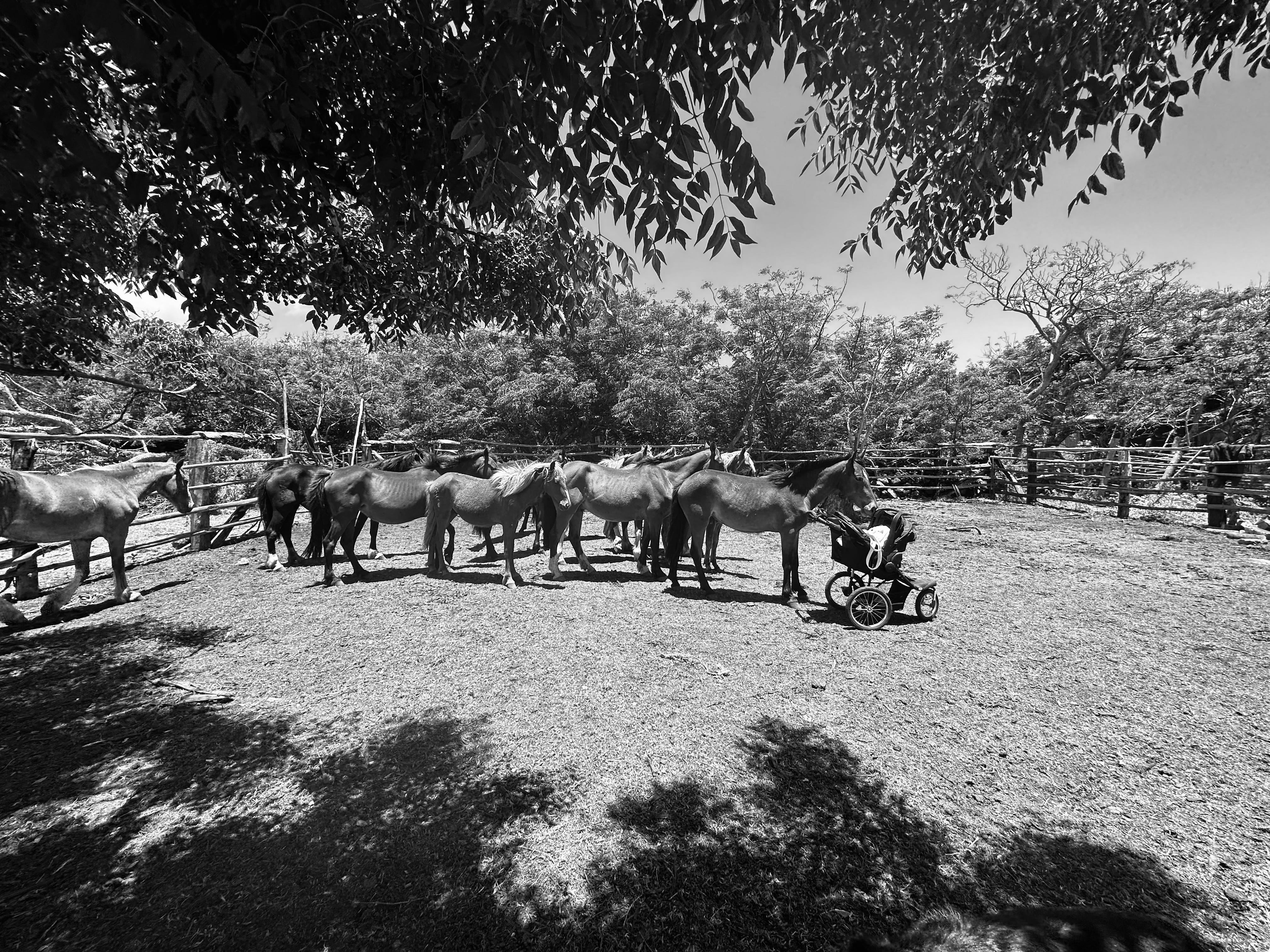
... and the micro-meditation of bringing cattle to water.

When I first met Ana Hito, we were collaborating on a dinner at her farm upstate. Walking into the barn before the event, I was struck by two things: the light streaming through the raw wooden beams and the plumes of dried hydrangeas hanging like chandeliers. The space was unadorned yet elegant, its beauty drawn from a thoughtful use of natural elements—a reflection of Ana’s creative philosophy: make a lot out of a little. Her Rapa Nui heritage deeply shapes this approach, where the concept of “use what you’ve got” is not just a mindset but a way of life.
A year later, when my husband Benny got a job near Ana’s mother’s farm, I called her for advice about the area. That conversation led to us renting a farmhouse from her family, where we spent an inspiring year in the Hudson Valley. It’s where my son Tal was born, his name inspired by my morning walks through dew-covered fields (“Tal” means dew).
Ana’s creativity is shaped by the contrasts between her two homes: the rugged landscape of Rapa Nui and the cultivated sophistication of the Hudson Valley. In Rapa Nui, the physicality of daily life demands her focus—bringing cattle to water, relying on rainwater, bartering with neighbors. It’s a slower, meditative pace that she describes as her “medicine,” clearing mental clutter and recalibrating her priorities. By contrast, the Hudson Valley inspires her through its refined beauty and the memories of her grandmother’s Frank Lloyd Wright house. Her grandmother’s meticulousness in curating every plate and spoon, instilled in Ana an appreciation for the intentionality behind beauty. That influence, combined with Rapa Nui’s ethos of resourcefulness, deeply informs Ana’s creative philosophy. While Rapa Nui demands physical resilience, the Hudson Valley engages her imagination and sense of design.
Ana’s ability to blend these two worlds makes her creative approach compelling and authentic. Here’s our conversation about motherhood, interior design, place, boundaries, and work.
ATARA: Did you always envision yourself as a mother, or was it a path that revealed itself over time? How has motherhood pushed you creatively in unexpected ways?
ANA: I always envisioned myself as a mom—at one point, I imagined having 12 kids running around! But after becoming a mother, my perspective shifted. I originally thought I’d need to achieve certain milestones before having children, but life doesn’t always follow a set plan. When I became pregnant at 26, I realized how unnecessary it was to have everything figured out beforehand. Now, I’m glad I embraced motherhood when I did. It’s a constant balancing act between being the person I was before and evolving into who I am now, as both an individual and a mother.
Motherhood has made me reconsider what “having it all” means. For me, it’s about defining what fulfillment looks like, not by society’s standards but by my own. Since becoming a mom, I’ve felt a tug-of-war between personal goals and family life. Yet, I find joy in being grounded in the present, knowing that this season of life will shift as my child grows.
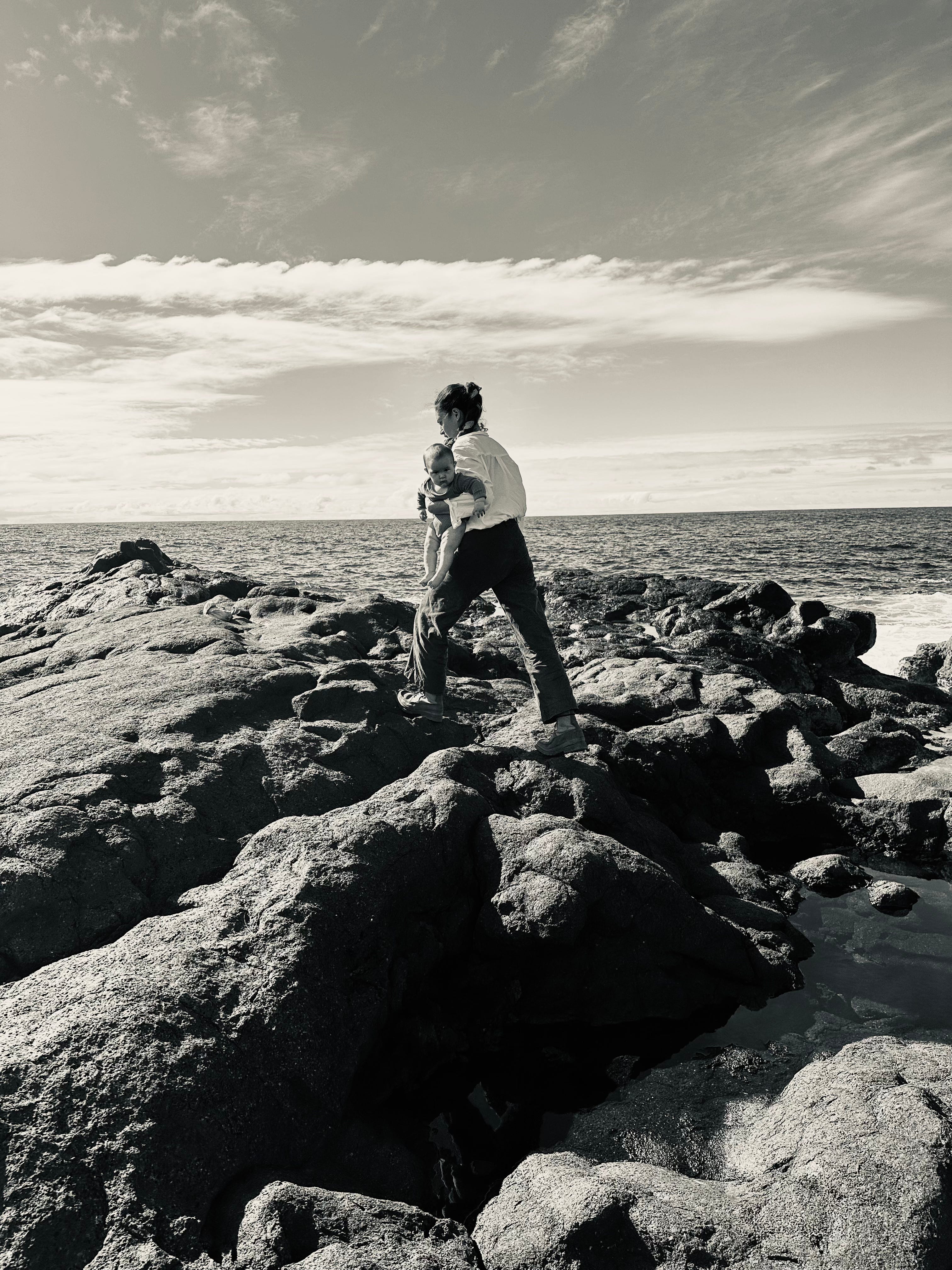
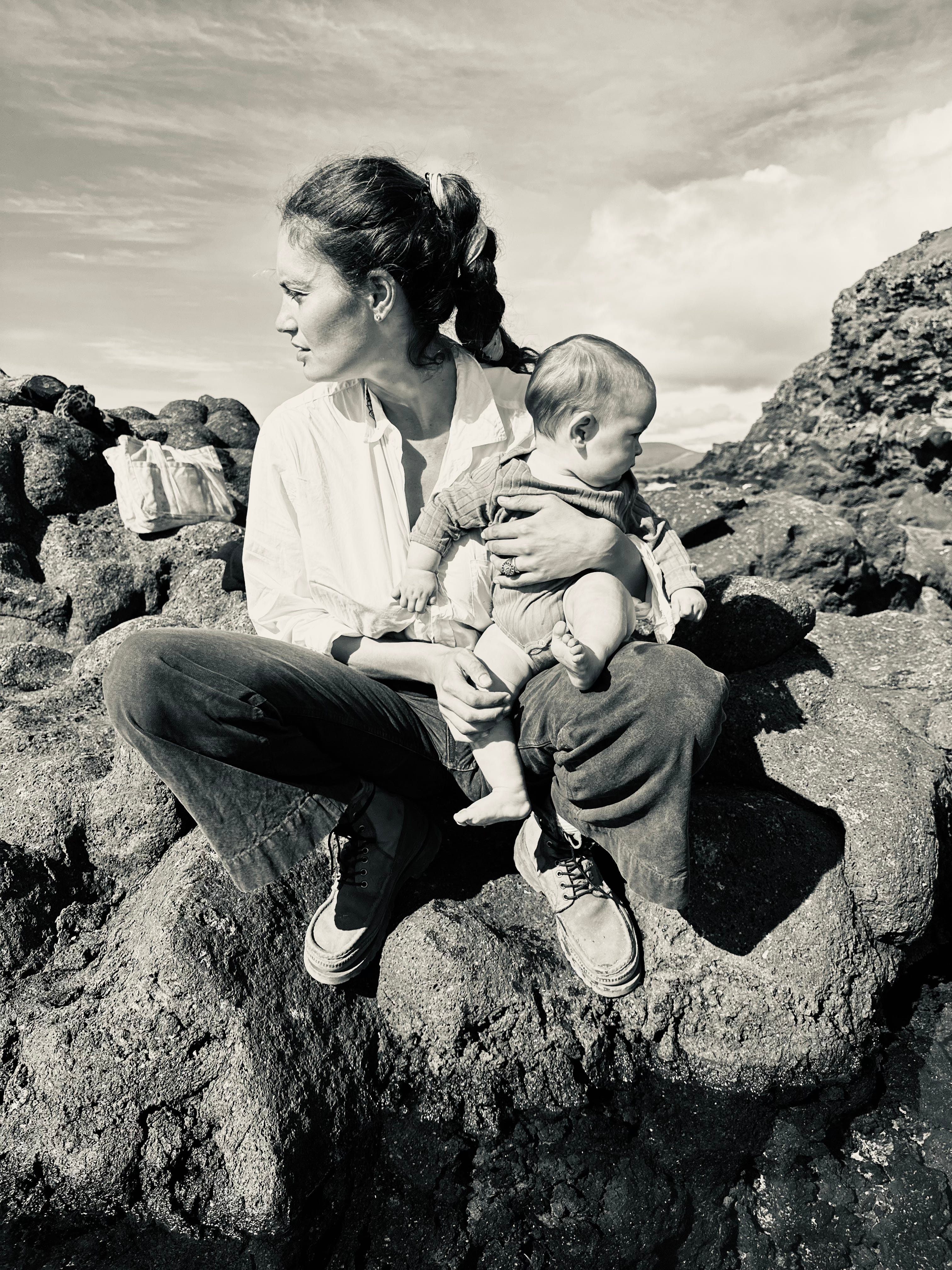
Living on Rapa Nui with my daughter has deepened my connection to the environment and changed my perspective on parenting. Here, the relationship between parent and child—and child and nature—is so different from what I experienced in the U.S. While I’ve had to put some personal aspirations on hold, being here allows me to create in new ways. It’s not a sacrifice, just a different path than I imagined, and one I’ve come to embrace.
ATARA: Your life bridges Rapa Nui and the Hudson Valley. How do these places shape your creativity and worldview?
ANA: These two places are opposites but share a connection to nature. I’ve always straddled two worlds: the rugged, slow-paced life of Rapa Nui and the more structured, cultivated environment of the Hudson Valley. Both are rooted in a connection to the land, but the contrasts are stark. In Rapa Nui, every task—like bringing cattle to water or tending the garden—becomes an act of presence and reflection. It’s a way of life that forces me to focus on what truly matters.
In the U.S., life is physically easier but more mentally demanding. Convenience often replaces connection, and community requires deliberate effort. For example, in Rapa Nui, my daughter sees people of all ages daily without planning, while in the U.S., I had to fabricate social interactions through playgroups and scheduled meetups. That contrast has made me appreciate both worlds—Rapa Nui grounds me, and the Hudson Valley inspires me.
The slower pace of Rapa Nui feels like a form of meditation, offering a mental clarity that’s hard to achieve in the fast-paced, productivity-driven culture of the U.S. While life here is challenging, it’s also deeply fulfilling, reminding me of the value of simplicity, community, and living in harmony with the land.
ATARA: What is Rapa Nui like for you on a soul level? How has its culture shaped you as an artist and mother?
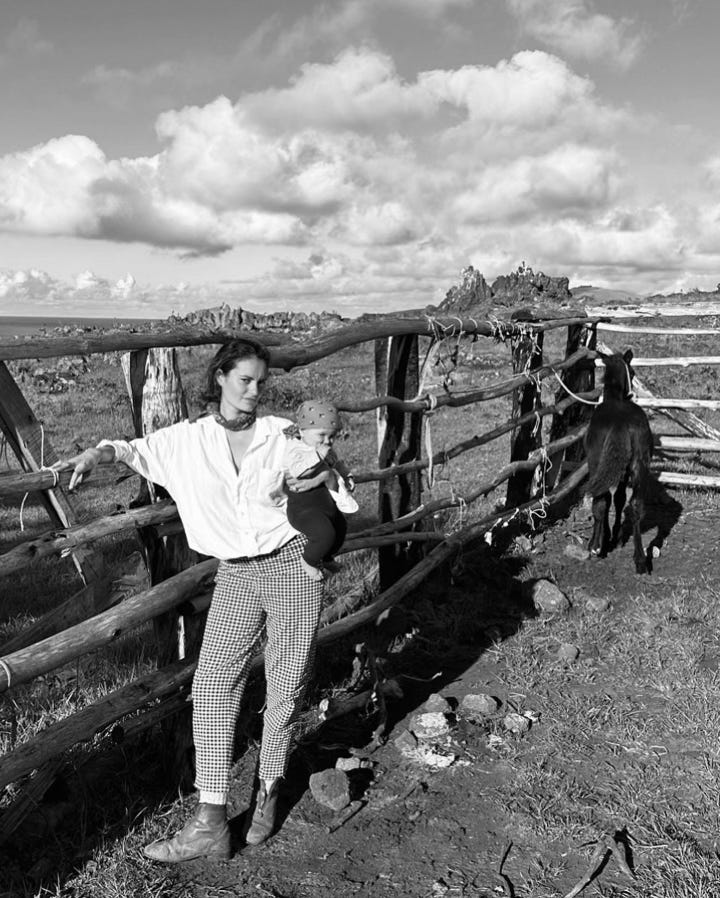
ANA: Rapa Nui feels like meditation. Life here is about essentials: tending the land, caring for animals, and living in the moment. The community is incredibly supportive. It’s a stark contrast to individualistic Western culture. The concept of “use what you’ve got” is deeply ingrained and inspires me creatively and spiritually. It’s so different from the individualistic culture of the U.S., where self-reliance often replaces communal care. This sense of togetherness has deeply influenced how I approach parenting and creativity.
ATARA: What first ignited your creativity? Were there traditions, stories, or people in your life growing up who made you see the world differently?
ANA: For me, creativity has always been about curiosity. Growing up between two very different worlds—Rapa Nui and the U.S.—I was constantly observing and questioning. Each environment inspired me differently, and that curiosity fueled my creativity. In Rapa Nui, the philosophy of “use what you’ve got” became a guiding principle. People made everything—from chicken coops to monumental Moai statues—from volcanic rock, which taught me to see possibilities in limitations.
My grandmother also played a big role in how I see the world. Her Frank Lloyd Wright house was meticulous, filled with curated china and objects, and the way she created spaces felt like an adventure in elegance. Similarly, a family friend who was a beauty editor taught me to find beauty in the everyday—like arranging fresh produce from the farmers market into a striking display. These influences taught me that creativity doesn’t have to be extravagant; it’s about elevating what’s around you.
Now, as a mother, I’m navigating how to balance meaningful work with being present for my family. I’ve always tied my life and identity to my work—everything I did was personal and part of how I made a living. But lately, I’m questioning whether I want my life to be my work anymore. I love the way I’m living now, but I’m figuring out how to sustain it without sacrificing creativity or turning it into something transactional. It’s a new challenge, but one rooted in the same curiosity and resourcefulness that have always guided me.
ATARA: Do you have rituals or habits that help you return to your creativity, even on days when life feels unbalanced or chaotic? Are there specific practices, tools, or memories that reignite your desire to create?
ANA: It all comes back to “use what you’ve got”! Whether it’s picking wildflowers for a centerpiece or using limited resources, this mindset re-centers me. Creativity comes from appreciating what’s available, both materially and internally.
ATARA: Is inspiration something you chase, something that finds you, or both? How do the rhythms of your life and surroundings shape your ability to create?
ANA: Inspiration finds me through observation and being present in the seasons and surroundings. Creativity flows when I’m attuned to what’s naturally available. It’s less about chasing ideas and more about being open to them.
ATARA: How has motherhood shifted your view on life, art, and work?
ANA: Motherhood has made me rethink everything—from who I am to what I value. It’s taught me to slow down and focus on what truly matters, like connection and presence.
ATARA: If you could share one piece of advice with mothers who feel disconnected from their creative selves, what would it be?
ANA: My advice to mothers is twofold: first, be an observer. Wherever you are, even in the simplest spaces, take time to notice the details around you. Observation fuels creativity—it’s not about visiting museums but being present and curious about your environment.
Second, draw inspiration from the seasons. There’s so much creativity to be found in what’s naturally abundant at any given time. Whether it’s flowers, produce, or the changing landscape, incorporating what’s around you into your life and space creates warmth and grounds you. This awareness fosters a subconscious centering that makes creativity flow more naturally.
ATARA: When you imagine your creative life in the next 5 or 10 years, what feels exciting or meaningful to you? What kinds of projects, moments, or shifts do you dream of?
ANA: My biggest project is making this ranch beautiful and self-sustaining. It’s already a stunning place, but I want to enhance its natural beauty and turn it into a space where we grow our own vegetables, raise animals, and live fully off the land. This way of life is deeply rooted in Rapa Nui traditions, but modern conveniences have shifted things here in ways I find concerning. I want this ranch to serve as an example for young people on the island—a place where things are done well, with care, and where resources are preserved.
This project is truly from scratch—there’s no infrastructure like electricity, so everything has to be built by hand. It’s challenging, but I’ve always been drawn to doing things the hard way, because it feels more rewarding and meaningful. For me, this is a long-term, possibly lifelong, project to create a beautiful, inspiring place that offers something beyond the convenience and pitfalls of modern life.
Being Rapa Nui means you can’t simply buy land; you inherit it, fence it, plant on it, and care for it. That responsibility feels like a privilege I want to honor. While something else might come along to redirect my energy in the future, for now, my focus is here. Even when I’m in the U.S., everything I do is in service of this vision, and I can clearly see what I want it to become—I just need to bring it to life.